The unglamorous
half of the business.
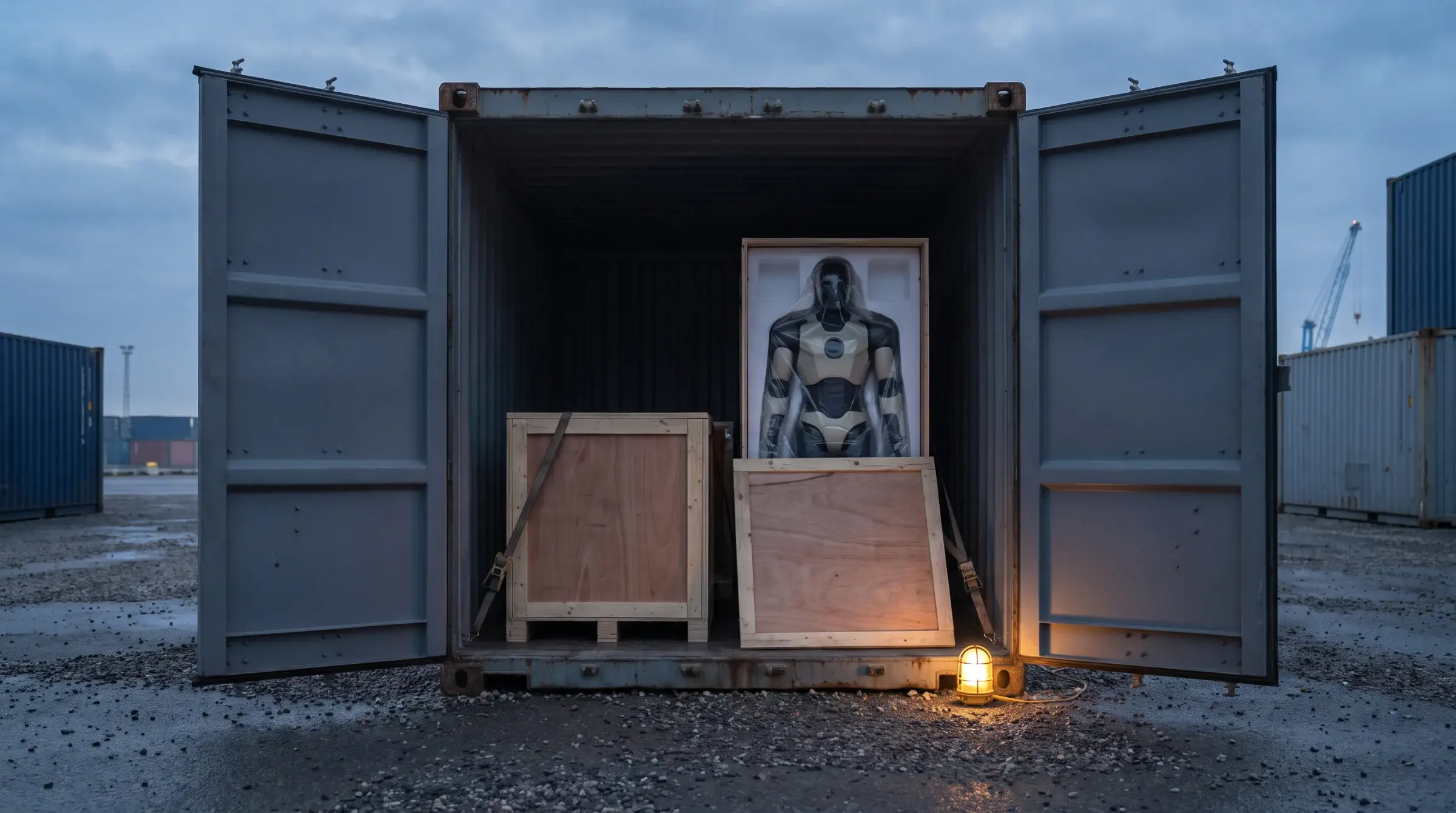
Buying a walking robot from overseas is mostly a logistics problem wearing a technology costume. Lithium batteries, customs codes, tariff schedules, crate dimensions, and whose problem it is when a hip actuator fails in month seven.
Taking that part off your operations team is the job we are set up to do. Here is how an order will move, and where the schedule usually slips. We have not moved one yet, so read the stages below as commitments rather than as a record.
Specification
We scope the work before we scope the robot. Payload, terrain, duty cycle, hours per shift, integration surface, and the failure cost if the machine stops. If a conveyor or an AMR is the right answer, that is what we will tell you.
- Site assessment
- Platform shortlist
- Written requirement
Factory quote
We will price direct with the manufacturer rather than through a layered import chain. No manufacturer agreement is signed yet, so an early quote will name the route it actually came through, distributor included. Either way the quote separates unit cost from the cost of getting it here, so a tariff change does not look like a price increase.
- Ex-works unit price
- Freight & insurance
- Duty & tariff line
Freight & customs
Battery class drives the route. Packs above 100 Wh face air-freight restrictions, so most full-size platforms move by ocean under UN 38.3 documentation. Freight-market guidance for that lane runs to roughly 30 to 45 days door to door plus clearance, which we have not yet tested with a shipment of our own, so a quote will carry a dated transit estimate and name where it came from. Small units can fly.
- UN 38.3 documentation
- Customs broker, to be appointed
- Bonded receipt, to be arranged
Commissioning
No unit has reached us yet and we have no technicians on payroll. The commitment is that every unit is unpacked, powered, calibrated and function-tested before it goes to you, by us or by a named contracted technician we tell you about first. Factory-direct should not mean the first person to open the crate is your operations lead.
- Bench test & calibration
- Firmware baseline
- Operator handover
Service
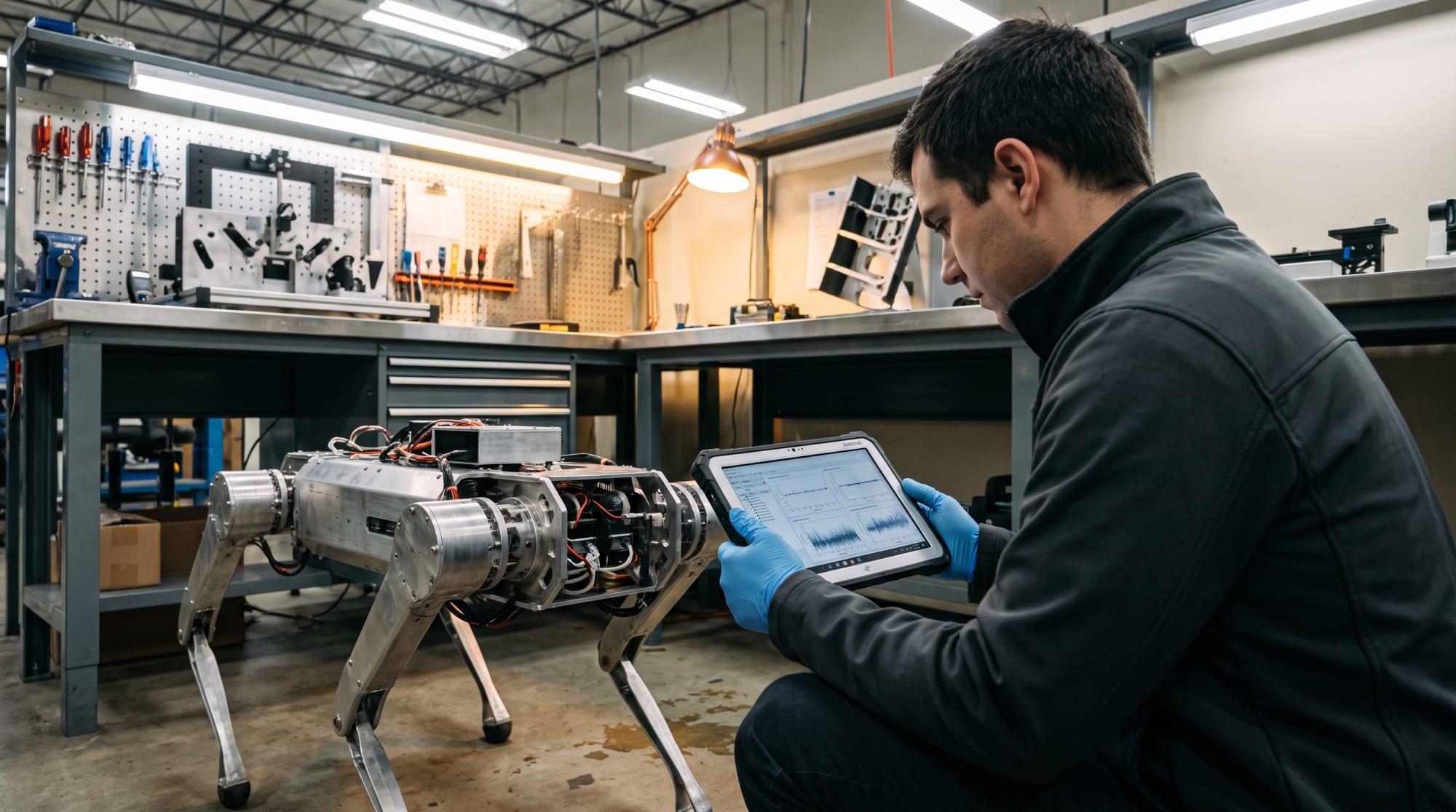
A named technician will stay attached to the unit, and consumables and common wear spares will be held in the United States so a worn actuator is a parts order rather than a return shipment across the Pacific. None of that is standing yet. It is the standard the first unit goes out on, and we will tell you what is in place on the day you order.
- U.S. warranty administration, planned
- Domestic spares, planned
- Field service partners, not yet named
Somebody has
to own it after
the sale.
The reason most overseas robot purchases go badly is not the robot. It is month seven, when something wears out and the only support channel is a time zone twelve hours away that answers in four-day increments.
Every unit we sell will go out with a named technician, a domestic spares position for common wear items and a warranty administered here. Ask us on the day you order and we will tell you exactly what is standing.
What can go wrong.
Tariffs move
Duty rates on Chinese-origin robotics have changed repeatedly and can change again mid-transit. Every quote we issue will state the rate assumed and the date it was checked, and we will re-confirm it before taking a deposit.
Lead times are real
If a factory quotes a 16-week build slot, that is a 16-week build slot, and no amount of asking moves it. We would rather lose an order than win it on a date we cannot hold.
Not every platform is export-cleared
Some configurations cannot legally ship to some end uses. We will check before quoting, not after your money is in.