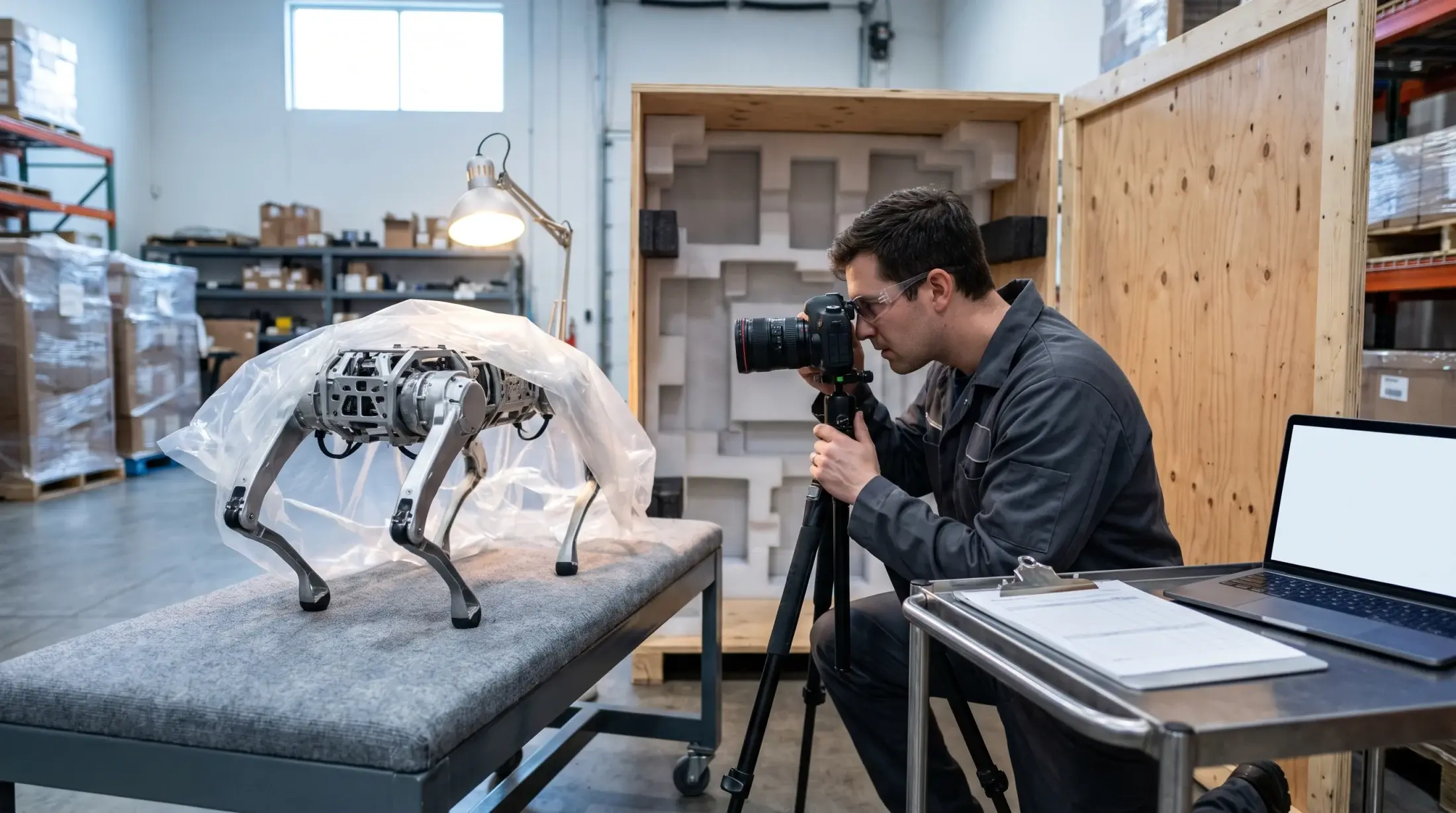
Legged robots
fall over.
Plan for it.
Liability, physical damage, transit and extended service. Four different things, regulated four different ways. Here is what each one is for, and exactly how far along we are on arranging them.
We are not an insurance company. We do not underwrite anything, we hold no producer licence in any state, and we are not registered as a service contract provider. No carrier and no broker is under agreement with us, and neither is any manufacturer.
So nothing on this page is an offer of insurance and none of it is a quote. It is an account of the four things a machine like this needs covered, how each is normally written, and what we will do once there are licensed people to do it with. If you need coverage bound today, the right call is to your own broker, and we will send them the technical detail they will ask for.
A walking robot is an unusual asset. It is mobile, it is expensive, it operates near people, and on the ocean route it will spend its first weeks in a shipping container. Most commercial policies were not written with it in mind, and the gaps only surface at claim time.
There are four distinct things to arrange. They are not the same product and they are not regulated the same way, so they are listed separately here rather than bundled into a word like “protection.”
Four lines.
Four different rules.
Third-party liability
InsuranceInjury or property damage the robot causes
Bodily injury and property damage arising from the operation of the platform on your site or in public: the person it bumps, the rack it clips, the pallet it drops.
A 72 kg machine moving at 1.5 m/s around people is a general liability question your existing policy may exclude, treat as an unscheduled auto-equivalent, or simply have never contemplated. Most operators discover the gap during the claim.
Written per site and per fleet size, with limits set against the environment. A warehouse aisle and a public retail floor price very differently.
Physical damage to the platform
InsuranceThe robot itself
Accidental damage to the unit: falls down stairs, collisions, crush, water ingress beyond its rating, fire, theft. Repair or replacement of the machine you paid for.
Legged robots fall over. That is not a defect, it is the operating envelope. A replacement hip actuator on a six-figure platform is not a line item most operations budgets absorb quietly.
Agreed-value or replacement-cost basis, scheduled by serial number, with a deductible you choose against the premium.
Transit and marine cargo
InsuranceOcean, air and domestic freight
Loss or damage in transit from the factory floor to your dock, including the ocean leg, port handling, customs inspection and the final domestic run.
Freight-market guidance for the ocean lane runs to roughly 30 to 45 days door to door plus clearance, which we have not yet tested with a shipment of our own. That is a long time in other people's hands. Carrier liability is limited by weight, not by value, which on a crated robot is close to worthless as a remedy.
Normally placed per shipment, or on an open cargo policy once a buyer is shipping repeatedly. This is the line we expect to matter first, because it attaches the moment a unit leaves the factory.
Extended service plan
Service contractWear, faults and consumables
Parts and labour beyond the manufacturer's warranty term, covering wear items, actuator and drivetrain faults, and scheduled service. We have no technicians on payroll yet, so any plan we sell would name who performs the work before you sign it.
The published warranty terms we have read on this class of equipment are short, usually about a year, and they run out while a hard-worked machine is still young enough to be earning. We have held no manufacturer warranty document yet, so the term on your platform goes on the quotation from the manufacturer's own paperwork rather than from a market average.
Normally written for 12, 24 or 36 months and quoted with the unit. This is a service contract rather than insurance, which is a different regulatory category with its own state registration requirements. We have not registered as a service contract provider in any state yet.
The paperwork
starts before
the machine ships.
A claim is only as good as the record behind it, and that record has to be built while nothing has gone wrong yet. These are commitments about how we intend to work, not a description of a claims desk that is already running.
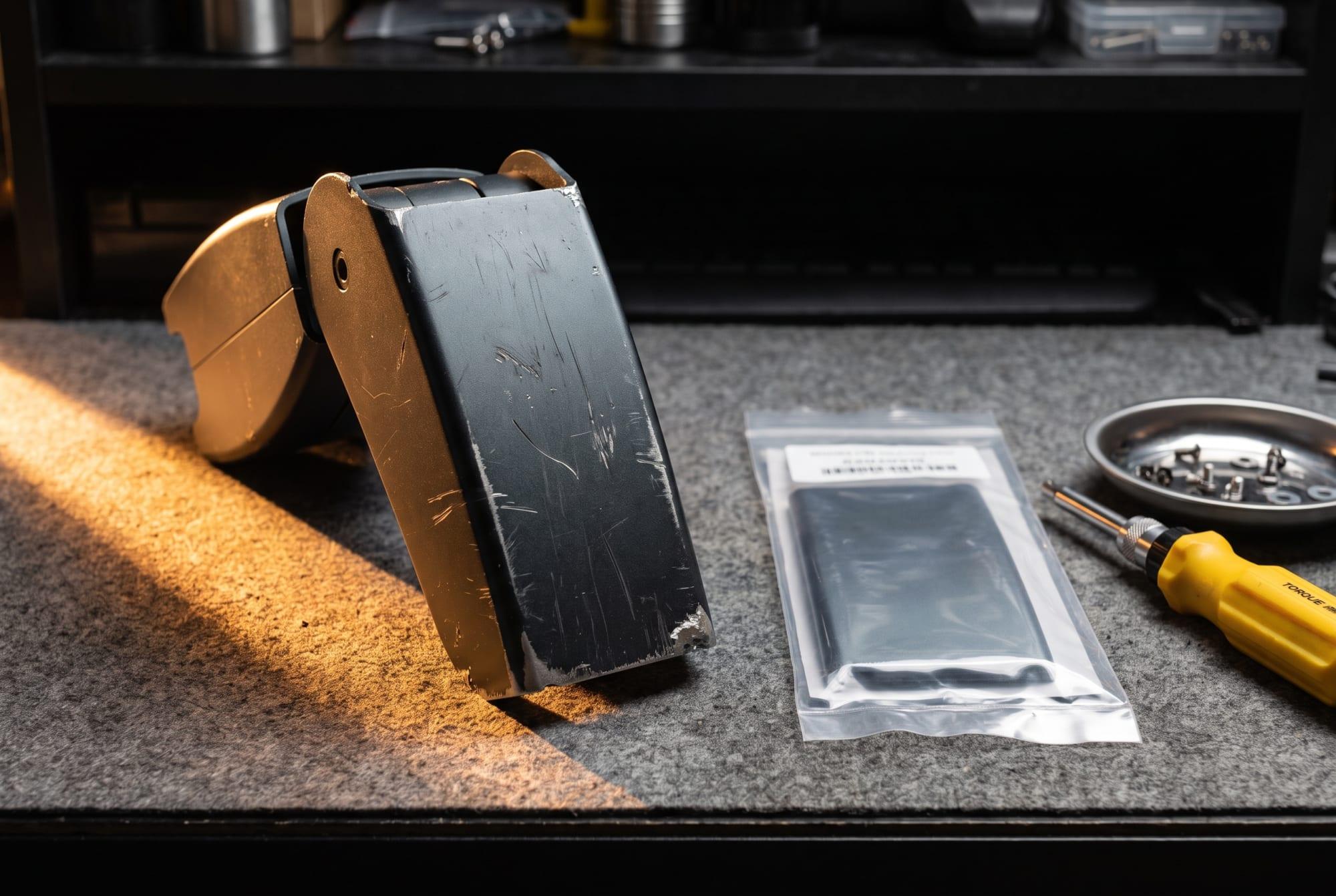
A condition report before it ships
Every unit will be photographed, serial-recorded and function-tested before it leaves our hands, and that record will go to you as well as staying with us. It is the baseline any later claim gets measured against, and it is worth building whether or not a policy is ever written.
The coverage cost shown as its own line
When we can quote it, liability, physical damage and transit will appear as separate lines beside the unit price rather than folded into it. You should be able to see what the risk costs and decline it if you would rather carry it yourself.
Placed by licensed people, not by us
Any insurance will be underwritten by a licensed carrier and placed by a licensed broker, named on your documents. We are not an insurer, we hold no producer licence, and we will not bind, quote or negotiate coverage ourselves.
The file kept where the paperwork already is
The condition report, the serial record and the service history will be held here for every unit we ship, so if a claim happens we will assemble the file and hand the broker something complete. Nothing has shipped yet, so we hold no such file today. The claim itself is decided by the carrier, not by us.
We are not
the insurer.
Insurance has to be written by a licensed carrier and placed by a licensed broker, and both will be named on your documents. What we can bring is the part they cannot: the condition report, the serial record and the service history. That is what decides a disputed claim, and it has to exist before the claim does.
Said up front.
These are the exclusions that come up on this class of risk. They are here so nothing surprises you later, not because we have a policy of our own to quote from.
- Deliberate misuse, unauthorised modification, or operating a unit outside its stated environmental envelope.
- Loss caused by operating a platform without the FCC authorisation required to run it lawfully. Coverage does not repair a compliance problem.
- Consequential business loss, unless separately underwritten.
- Anything the manufacturer's warranty already covers, which we will tell you about rather than sell you twice.
Exclusions vary by carrier and by state. The only binding list is the one on the policy your broker issues. Nothing on this page is a policy, an offer of insurance, or advice about what to buy.
Think about the risk
before the purchase order.
Tell us the environment and the duty cycle when you ask about a platform. We will write down what a broker will need to see, and say plainly which of these four lines we can help with today and which we cannot.