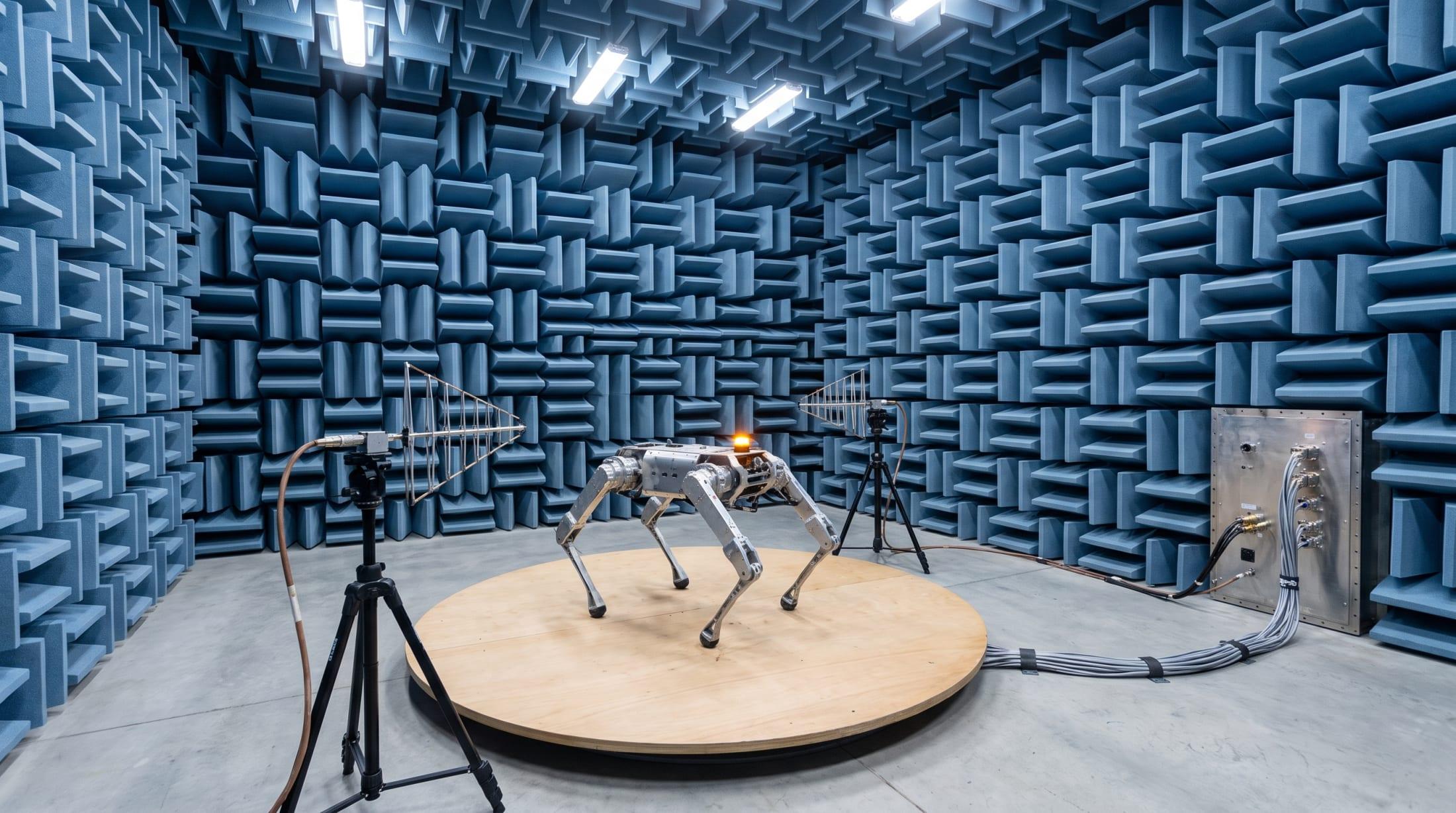
The FCC changed
what can newly
enter this market.
Most of the marketing we have read on this equipment has not been updated since. Here is the rule, what it does to your purchase, and what we will put in writing before you spend anything.
What happened, and what the rule does
On 28 July 2026 the FCC added foreign-produced advanced robotic devices to its Covered List. Covered devices can no longer receive new FCC equipment authorizations, and an RF-emitting device without an equipment authorization cannot lawfully be imported or marketed in the United States.
What counts as covered
The FCC's definition reaches a mobile mechanical device that moves under its own power, weighs more than 4.4 lb (2 kg) including any dock or charging base, carries environmental sensors, has network connectivity of at least 200 kbps, and runs autonomous navigation or remote-control software. All five have to be true at once. On the published specifications we have read, every foreign-produced humanoid and quadruped in our directory meets all five.
What sits outside it
Connected road vehicles, rail vehicles, aircraft, underwater vehicles, medical devices and fixed industrial robots sit outside the definition. Legged mobile robots do not.
What is grandfathered
A restriction on new authorizations is not a ban on owning or operating a device already authorized. Platforms whose grants issued before 28 July 2026 keep those grants and remain marketable unless the FCC acts separately to revoke them. On the reporting we have read, an OET public notice issued the same day, numbered DA 26-789, permits software and firmware updates on already authorized robots through at least 1 January 2029. We have not read that notice in the original, so treat the date as reported rather than as verified by us.
Hardware revisions matter
Hardware modification of a covered device is prohibited without a separate waiver. That is why we record the exact hardware revision, not just the model name. A revision change can move a unit from authorized to unauthorized.
Conditional Approval
A Conditional Approval process exists for specific devices or classes of device, reviewed by the Department of War and reflected on the Covered List. We have not found a published timeline or published criteria for it, and we will link them here when we do. Until then, anyone promising you a Conditional Approval on a schedule is guessing.
What is still unsettled
Real ambiguity remains about what counts as a "new model" and where "foreign-produced" lands at the margins for a device assembled from mixed-origin components. We track it and we will tell you when something we quoted you changes.
The short version. A device is covered only if it meets every element of the definition at once. Miss one and the rule does not reach it, so “foreign robots are banned” is the wrong sentence. A covered platform authorized before 28 July 2026 keeps that authorization, and newly built units of that model can still be imported and sold. What cannot happen is a new authorization for a covered model, and without one it cannot lawfully be imported or marketed here, whatever a factory tells you over email. The whole game is paperwork, and paperwork is checkable.
Five states.
No euphemisms.
Every platform in our own catalog carries one of these, on the card and on its page. The world platform directory, the drone board and the entry-tier board use their own labels, because each answers a different question. Where the honest answer is “we have not checked yet,” that is what it says.
FCC authorized, grant predates 28 July 2026
This platform holds an FCC equipment authorization issued before the Covered List action. It may be lawfully marketed, sold and operated in the United States. Every quote we issue will carry the FCC ID and grant date so you can verify it yourself against the FCC database. We have not issued one yet.
Domestic end product, outside the Covered List
This platform meets the domestic end product standard the FCC action exempts, so the Covered List restriction does not apply to it. Country of production and final assembly will be named on the quotation rather than left for you to assume.
Operating under Conditional Approval
This platform is covered by the Covered List action but is the subject of a Conditional Approval. Conditional Approval is a substantive government review, not a self-declaration. We will not quote against it until we hold the written approval naming the exact model, and we will show you that document.
Restricted, not currently importable
This platform falls inside the Covered List definition and does not hold a pre-existing authorization. It cannot receive a new FCC equipment authorization, which means we cannot lawfully import or sell it into the United States today. We list it because you should know it exists and why you cannot have it yet, not to take your deposit against it.
Authorization status not yet verified
We have not yet confirmed this platform's FCC grant record against the authorization database. Until we have, we will not represent it as authorized. Ask us and we will check the specific hardware revision before you commit to anything.
Every row unverified.
This board reflects what we have verified, not what we hope. Every row currently reads unverified because we hold no manufacturer agreement, have never imported or sold a unit, and will not publish a grant record we have not personally checked against the FCC authorization database. When a row changes, it changes here first. The wider market, as far as the public record we searched goes, with FCC IDs and grant dates where they exist, lives on the world platform directory.
| Platform | Series | FCC status | FCC ID | Production origin |
|---|---|---|---|---|
| HX-1 | humanoid | FCC · Unverified | Not on file | To be stated on quote |
| HX-3 Industrial | humanoid | FCC · Unverified | Not on file | To be stated on quote |
| Q-4 Field | quadruped | FCC · Unverified | Not on file | To be stated on quote |
| Q-2 Compact | quadruped | FCC · Unverified | Not on file | To be stated on quote |
| Q-6 Heavy | quadruped | FCC · Unverified | Not on file | To be stated on quote |
| HX-2 Service | humanoid | FCC · Unverified | Not on file | To be stated on quote |
| DK-1 | desktop | FCC · Unverified | Not on file | To be stated on quote |
| DK-2 Kit | desktop | FCC · Unverified | Not on file | To be stated on quote |
| DK-4 Classroom Pack | desktop | FCC · Unverified | Not on file | To be stated on quote |
| AV-1 Responder | aerial | FCC · Unverified | Not on file | United States |
| AV-2 Survey | aerial | FCC · Unverified | Not on file | United States or allied production |
Six things,
in writing,
every time.
We are a reseller. We do not certify anything ourselves and we will never imply otherwise. What we can do, and what we have not seen anyone else in this market do, is find the documents, check them, and hand them to you before you pay. We have not issued a quote yet. These six are the standard the first one goes out on.
FCC ID and grant date
Printed on the unit, recorded on the quote, verifiable by you against the FCC authorization database before you pay anything.
Exact hardware revision
Not just "Model X" but the revision. An authorization attaches to specific hardware, and a silent revision bump can invalidate it.
Country of production and final assembly
The Covered List turns on where a device is produced. We state it rather than letting you assume it.
Battery class and shipping documentation
UN 38.3 test summary and watt-hour rating for every lithium pack, which drives whether a unit can fly or has to sail.
Ingress rating and operating temperature
IP rating and the real temperature envelope, taken from the manufacturer's datasheet and named as such.
What we do not have
If a platform has no NRTL report, no CE marking, or no confirmed grant, that is written on the quote too. The absence of a document is information.
Named, not implied.
These are the frameworks that govern this equipment. Listing a standard is not the same as holding a certificate against it, and we will always tell you which one we mean for a given unit.
FCC Part 15
U.S. equipment authorization for unintentional and intentional radiators. The rule the Covered List action operates on.
UN 38.3
Transport testing for lithium batteries. Governs whether a pack moves by air or ocean, and at what documentation burden.
ISO 10218 / ANSI-RIA R15.06
Foundational industrial and collaborative robot safety standards.
ANSI/RIA R15.08
Safety standard written specifically for industrial mobile robots.
ISO 12100 / ISO 13849
Machinery risk assessment and safety-related control system performance.
IEC 60529 (IP)
Ingress protection rating against dust and water. The IP number on the spec table.
Check us.
Everything on this page traces to the following. The primary record comes first, because that is what you should check us against. If you think we have read any of it wrong, tell us and we will correct it.
Primary. The record itself.
- FCC, Covered List. The list itself, as maintained by the Commission.Open ↗
- FCC, Equipment Authorization Search. Look up any FCC ID and grant date yourself.Open ↗
Secondary. Summaries we read.
- Wiley: FCC Adds Foreign-Produced Power Inverters and Advanced Robotic Devices to the Covered ListOpen ↗
- K&L Gates: FCC Adds Foreign-Produced Advanced Robotic Devices to the Covered List: Five Things to KnowOpen ↗
- Automation.com: What the FCC Ruling on 'Advanced Robotic Devices' Means for the US Mobile Robot MarketOpen ↗
- Physical AI Lab: FCC Foreign Robot Rule: Authorization, Sales and Existing UseOpen ↗
This page is a plain-language summary for buyers, not legal advice. Regulatory status changes and the FCC may act again. For a binding determination on a specific device, consult communications counsel or the FCC directly.
Ask us the
awkward question.
Name the platform you are considering, from us or from anyone else, and we will tell you where it actually stands. Even when the answer costs us the sale.